Our vision is to be a world-leading centre for intelligent metamaterials and high-performance structures across mechanical and civil engineering, where computational design, experimental characterisation, and additive manufacturing are seamlessly integrated to turn complex engineering challenges into fabrication-ready, real-world solutions.
Through a unified digital-to-physical workflow, AIMS will advance the science and engineering of architected materials and structural systems, and deliver validated, high-impact outcomes for advanced manufacturing, aerospace, transport, civil infrastructure, energy, and defence. By connecting academia, industry, and government, and by developing the next generation of research leaders, AIMS will strengthen Swinburne’s reputation for applied, future-focused engineering research and contribute to Australia’s sovereign capability and sustainable manufacturing priorities.
AIMS’s research advances the design and fabrication of high-performance structures and architected materials through the following three themes
Computational design and topology optimisation, enabling intelligent, fabrication-aware engineering solutions.
Experimental characterisation, bridging predictive modelling with physical validation to accelerate innovation.
Computational design and topology optimisation, enabling intelligent, fabrication‑aware engineering solutions
• Develop advanced topology optimisation frameworks for architected materials, lattice structures, and multifunctional components.
• Implement computational simulation tools for predicting mechanical response, wave propagation, impact behaviour, and failure mechanisms.
• Use GPU‑accelerated solvers, multi‑physics modelling, and uncertainty quantification to enable high‑fidelity, fabrication‑aware design.
• Create digital twins linking simulation, testing, and manufacturing data for closed‑loop optimisation.
Theme 2: Integrated Computational and Experimental Characterisation
AIMS will integrate computational characterisation (virtual testing, digital material models) with experimental characterisation (physical testing) to achieve a complete understanding of structural and material behaviour.
Computational Characterisation:
• Virtual mechanical testing of metamaterials under tension, compression, shear, bending, and impact.
• Simulation of dynamic deformation, energy absorption, and failure modes.
• Data‑driven modelling using machine learning to predict structure–property relationships.
Experimental Characterisation
• Quasi‑static and dynamic mechanical testing of architected materials and structural components.
• High‑velocity impact testing to evaluate crashworthiness, penetration resistance, and energy dissipation.
• High‑speed imaging, Digital Image Correlation (DIC), and full‑field strain measurement.
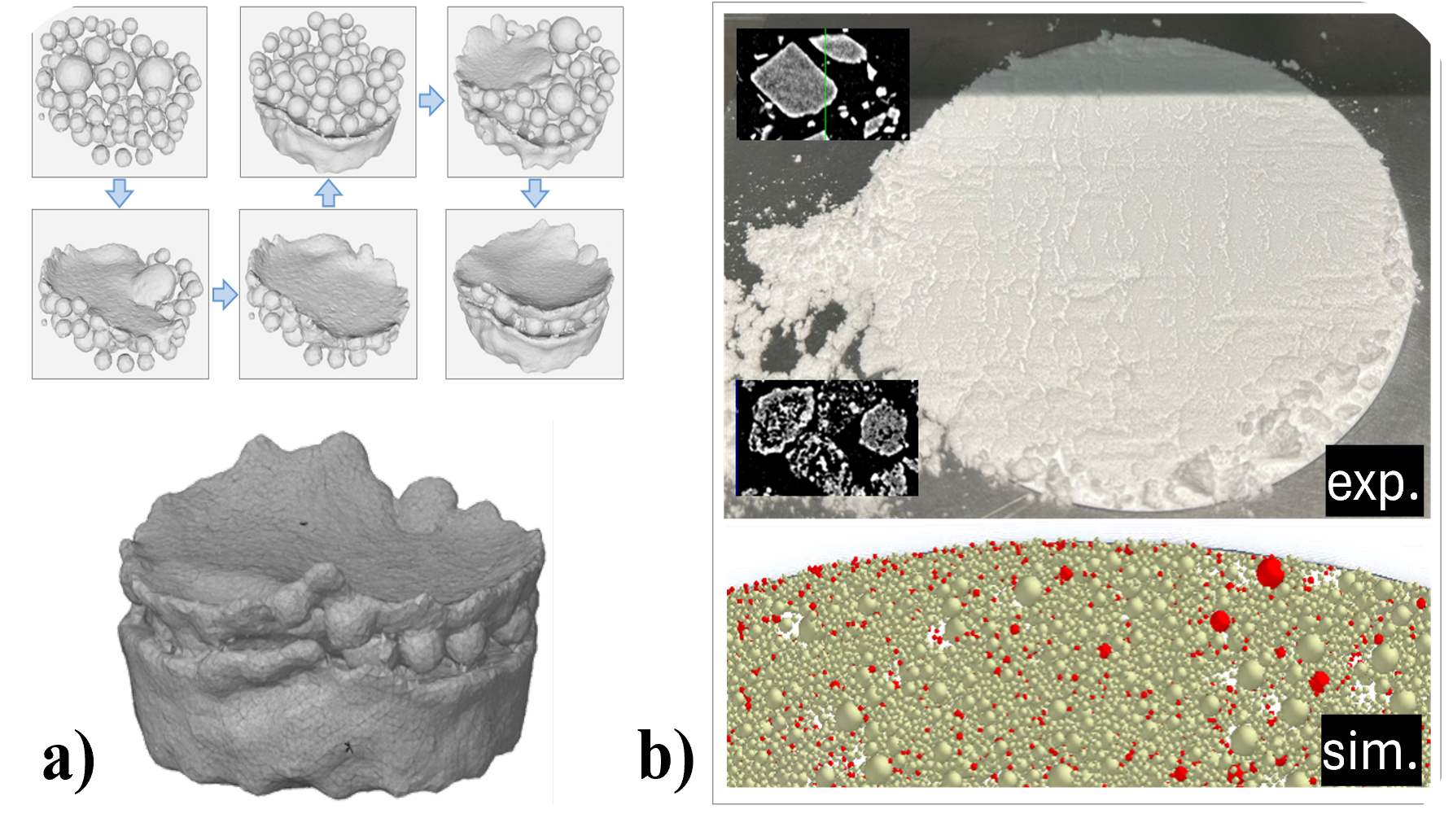
• Microstructural analysis to correlate geometry, defects, and performance.
Theme 3: Additive Manufacturing and Fabrication
• Fabricate optimised designs using metal and polymer additive manufacturing platforms.
• Develop manufacturing‑constrained optimisation to ensure printability and structural integrity.
• Explore multi‑material printing, micro‑architected lattices, and hierarchical metamaterial fabrication.
• Establish a complete design, simulate, print, test, and refine workflow.
Xiaodong Huang
Cong Wang, Tao Xu, Xiaodong Huang
Xiaodong Huang, Yulin Xiong
Deutscher Akademischer Austausch Dienst...
We welcome opportunities for research collaboration and partnerships. If you are interested in working with us or learning more about our research projects, please feel free to get in touch.
Email: aims@swin.edu.au
We gratefully acknowledge the valuable support and contributions of our industry partners. Their continued collaboration helps drive innovation, advance our research, and translate our findings into real-world applications.